











Welcome to this month’s ASO Monthly – your go-to update on the most impactful developments in App Store Optimization.
Each month we cover algorithm changes, emerging trends, CRO insights, tool updates, and everything else that matters across the major app stores.
📬 Sign up for our newsletter to stay in the loop with every drop.
Subscribe to the ASO Monthly Newsletter
Get the latest ASO updates straight to your inbox, once a month.
Google Play Adds Topic Shortcuts and Followable Niches in Games
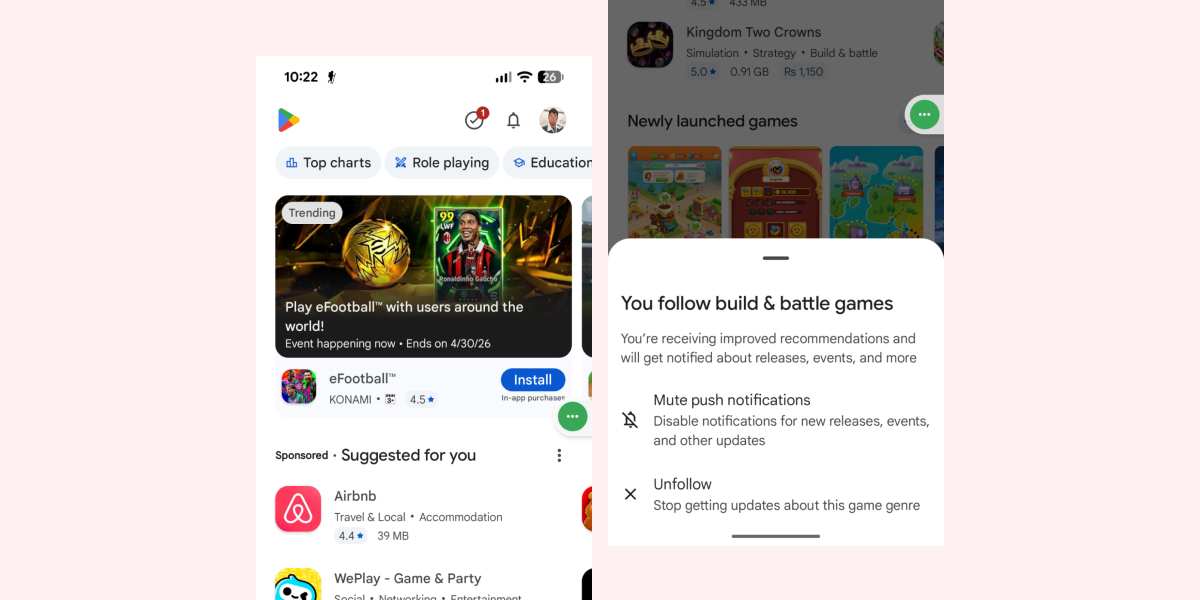
Google Play is rolling out category and topic shortcuts in the Games tab, making discovery more interest-led – similar to the Apple App Store’s editorial browsing. Users can now move from broad categories like “Role playing” or “Education” into more specific niches such as “Strategy,” “Tower defense,” “Build & battle,” or “4X.”
The bigger change is the new Follow option for niche topics. By following a topic like “Tower defense,” users can receive updates on new releases, events, and similar games in that category – turning genre discovery into an ongoing notification surface rather than a one-time browse.
For game publishers, this creates a meaningful new discovery layer beyond keyword search, charts, and featuring. Genre accuracy, metadata, tags, and event strategy all become more important, since apps can now surface through topic-based recommendation feeds. Developers have a stronger reason than ever to position games clearly within specific subgenres – especially to reach high-intent players who actively follow those niches.
Apple’s April 28 SDK Gate Is Now Live
Starting April 28, 2026, Apple began rejecting app submissions not built with Xcode 26 or later and the latest platform SDKs. Technical readiness is now a direct precondition for App Store updates, ASO tests, and creative refreshes.
Apps that miss the requirement cannot ship at all – meaning listing freshness, seasonal campaigns, and Custom Product Page experiments get delayed alongside product releases. Teams still running older pipelines are effectively frozen until they migrate.
The impact goes beyond engineering. If a build is blocked, your metadata roadmap is blocked too – screenshot refreshes, launch timing, and any conversion work tied to a release window all stall.
The requirement also pulls in platform-specific SDK updates for iOS, iPadOS, tvOS, visionOS, and watchOS, so multi-platform apps may need broader release coordination than expected.
Source: Here
Google Play Store Adds Search for App Reviews
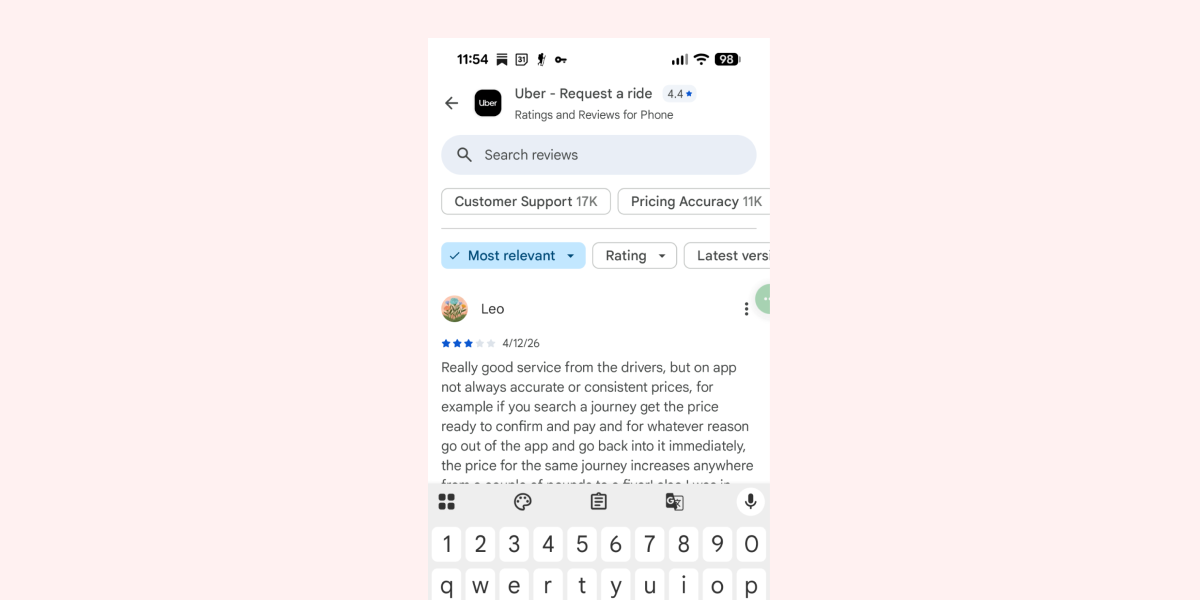
On April 7, Google began rolling out a Play Store update that lets users search within app reviews. Users can now find feedback on specific topics – ads, crashes, performance, in-app purchases – directly from the “See all reviews” page. The search bar currently works through exact phrase matching, and requires at least two words.
For Android apps, this makes review sentiment more visible at the point of download. Common complaints and value drivers are easier for users to surface, so treat review themes as part of your conversion funnel: monitor recurring search-worthy issues, address high-friction topics in product messaging, and prioritize fixes that could otherwise block installs.
Apple Expands App Store Localization to 11 New Languages
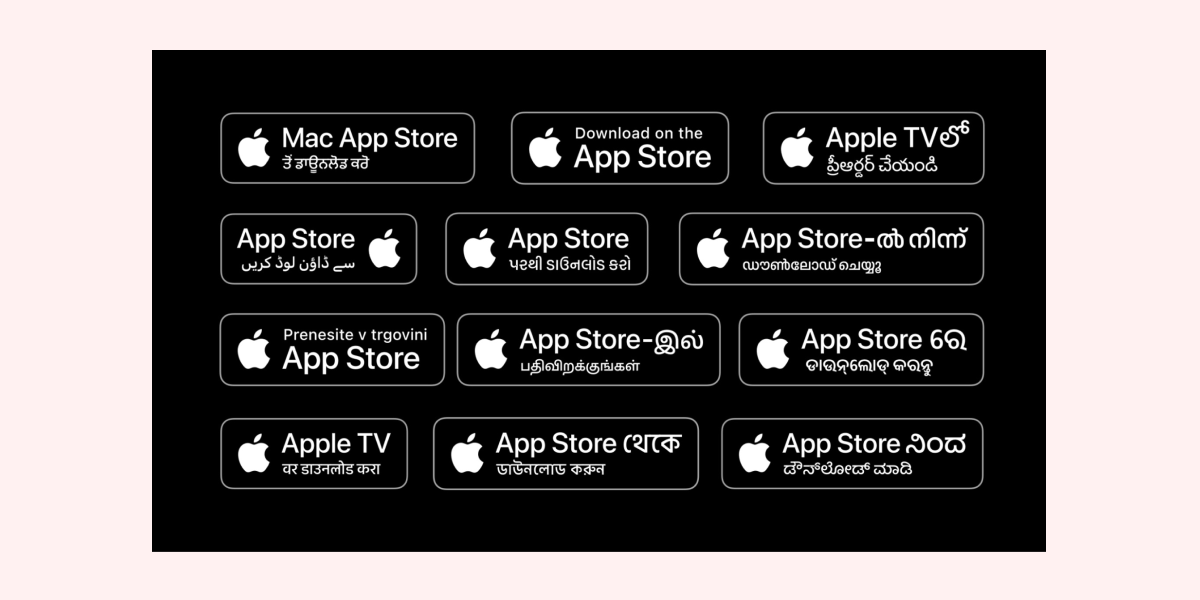
On March 31, Apple expanded App Store Connect localisation support to 11 new languages, bringing the total to 50. The additions include Bangla, Gujarati, Kannada, Malayalam, Marathi, Odia, Punjabi, Slovenian, Tamil, Telugu, and Urdu – with a clear emphasis on improving reach in India and Pakistan.
For apps targeting multilingual or high-growth markets, this is a direct ASO and conversion opportunity. Localising app names, descriptions, screenshots, and marketing badges can make listings feel more relevant to local users and unlock incremental discovery and install growth.
 Source: Here
Apple Introduces Monthly Payments for Annual Subscriptions
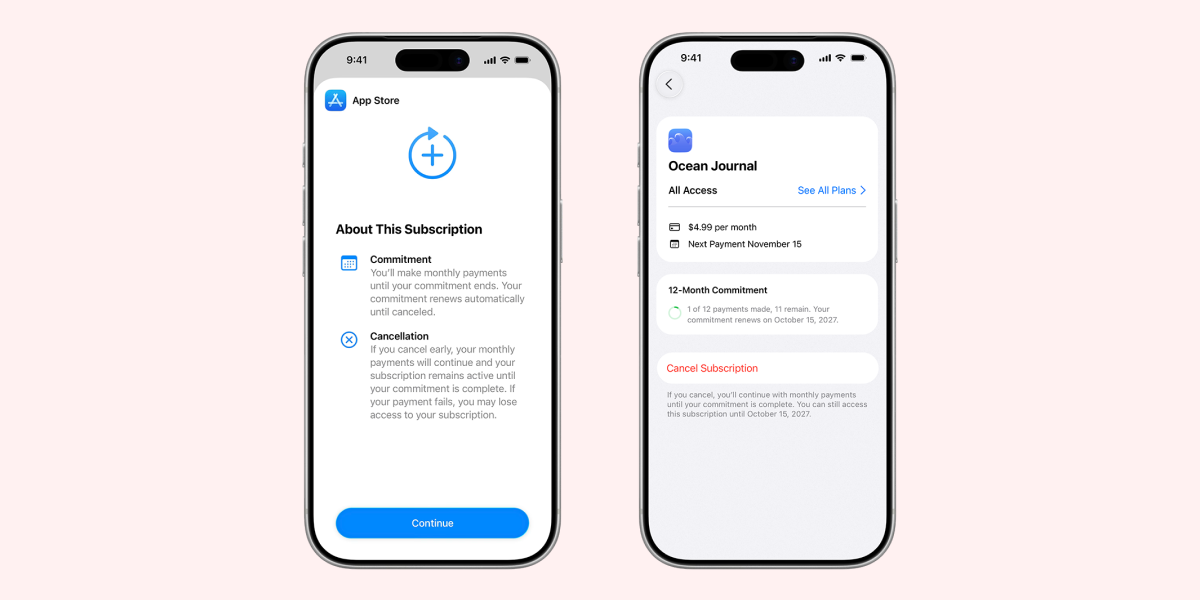
On April 27, Apple introduced a new App Store pricing option: developers can now offer annual subscriptions paid in monthly installments over a 12-month commitment. It keeps the value proposition of an annual plan while removing the upfront price barrier.
For subscription apps, this is one of April’s clearest monetization levers. You can frame the annual plan as lower-friction, more flexible, and easier to justify at the point of purchase – without changing the core offer.
 Source: Here
App Tweak Reports Another Significant Algorithm Change in App Store
On April 22, the App Store went through another major algorithm shift. This may be connected to the algorithm refinements Apple has been making using LLMs to improve app store search results, as described in this research paper.
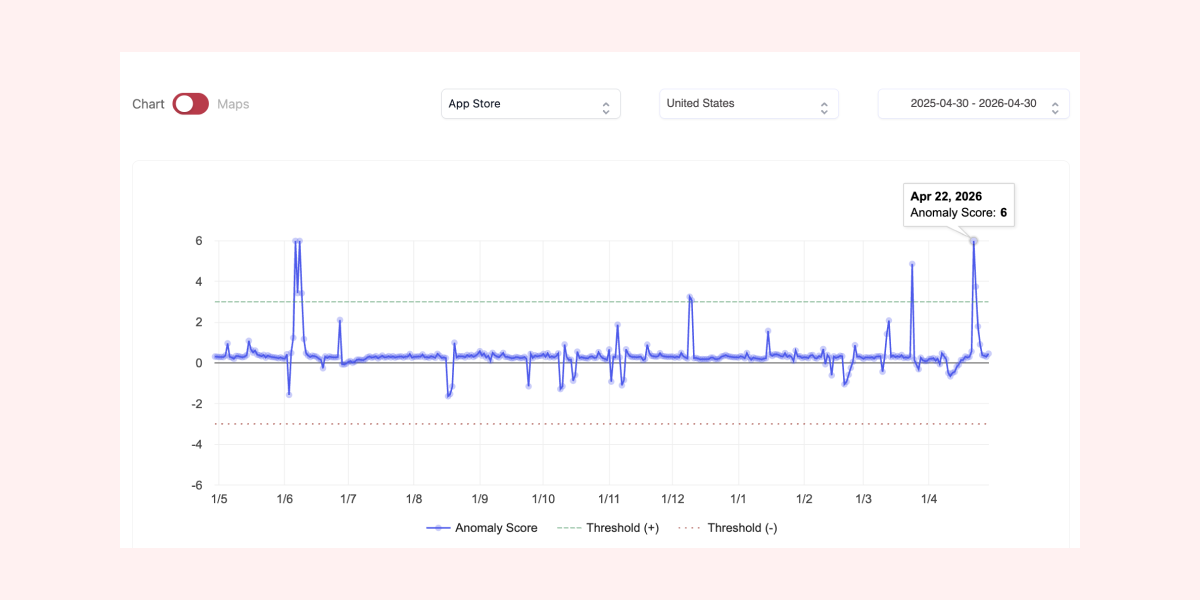 Source: App Tweak Algorithm Change Monitor
Further Reading
- ASO vs SEO: key differences between app store optimization and SEO | AppFollow
- How to leverage Reddit to increase your app visibility | AppTweak
ASO with Experts:
Apple’s latest App Store research paper offers a useful look at how LLMs may be used to tag apps against relevant search queries – particularly where traditional behavioural data is limited. Apple almost certainly has strong performance signals for short-tail keywords, but the challenge becomes much harder for long-tail and niche searches, where there isn’t enough user behaviour data to confidently judge relevance.
That’s where LLMs come in. In the absence of large-scale human judgement or search behaviour, they’re being trained to infer which apps are relevant to more specific, lower-volume queries.
The takeaway for ASO teams is clear: if you want to rank for long-tail keywords, your listing needs to send strong relevance signals. Metadata, keyword selection, descriptions, screenshots, and overall positioning should consistently reinforce the niche use cases you want to be discovered for.
In practice, long-tail visibility may become less about stuffing more keywords and more about making sure the algorithm clearly understands what your app does, who it’s for, and which specific needs it solves.
Talha Mumtaz
Senior Growth Manager
Table of Contents