











Welcome to this month’s edition of ASO Monthly — your go-to update on what’s moving the needle in App Store Optimization.
We break down the latest algorithm changes, trends, and experiments across app stores, alongside CRO insights, tool updates, and developer platform news.
📬 Subscribe to our newsletter to get ASO Monthly in your inbox every month:
Subscribe to the ASO Monthly Newsletter
Get the latest ASO updates straight to your inbox, once a month.
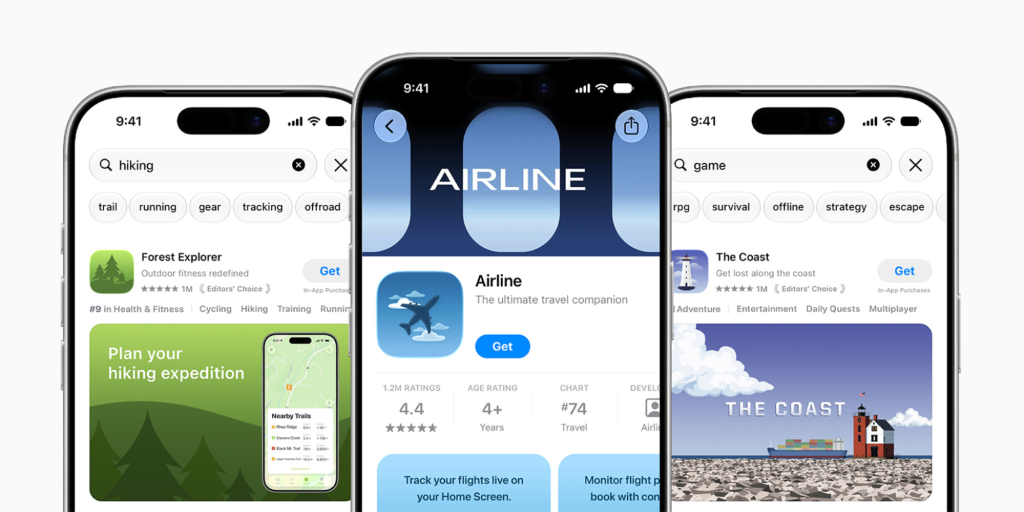
Apple introduced new creative assets for the App Store
What happened: On August 5, Apple published “Get ready for new creative assets on the App Store,” saying developers will soon be able to use new images and videos beyond in-use visuals to showcase brand, seasonal promotions, and new content across the product page header, search results, In-App Events, and more; Apple also released Figma, Photoshop, and Pixelmator templates ahead of a fall launch.
ASO Impact: This is one of the most important CRO shifts of the year because App Store merchandising is expanding from “proof of product” toward “brand plus campaign storytelling.” Teams should prepare modular creative systems now: one set for evergreen brand positioning, one for seasonal/event-led acquisition, and one for update/content beats tied to In-App Events and CPPs, because the winning App Store playbook may become more campaign-oriented and less screenshot-only.
Source: developer.apple.com
Apple changed EU business terms for apps
What happened: Apple announced on August 17, updated August 18, that it is moving EU developers to a single set of business terms effective October 1, replacing the Core Technology Fee with a 5 percent Core Technology Commission for apps distributed outside the App Store and revising commission structures for App Store apps using IAP, alternative payments, or external purchase links.
Source: Here
Google has increased the asset sizes on the store listings
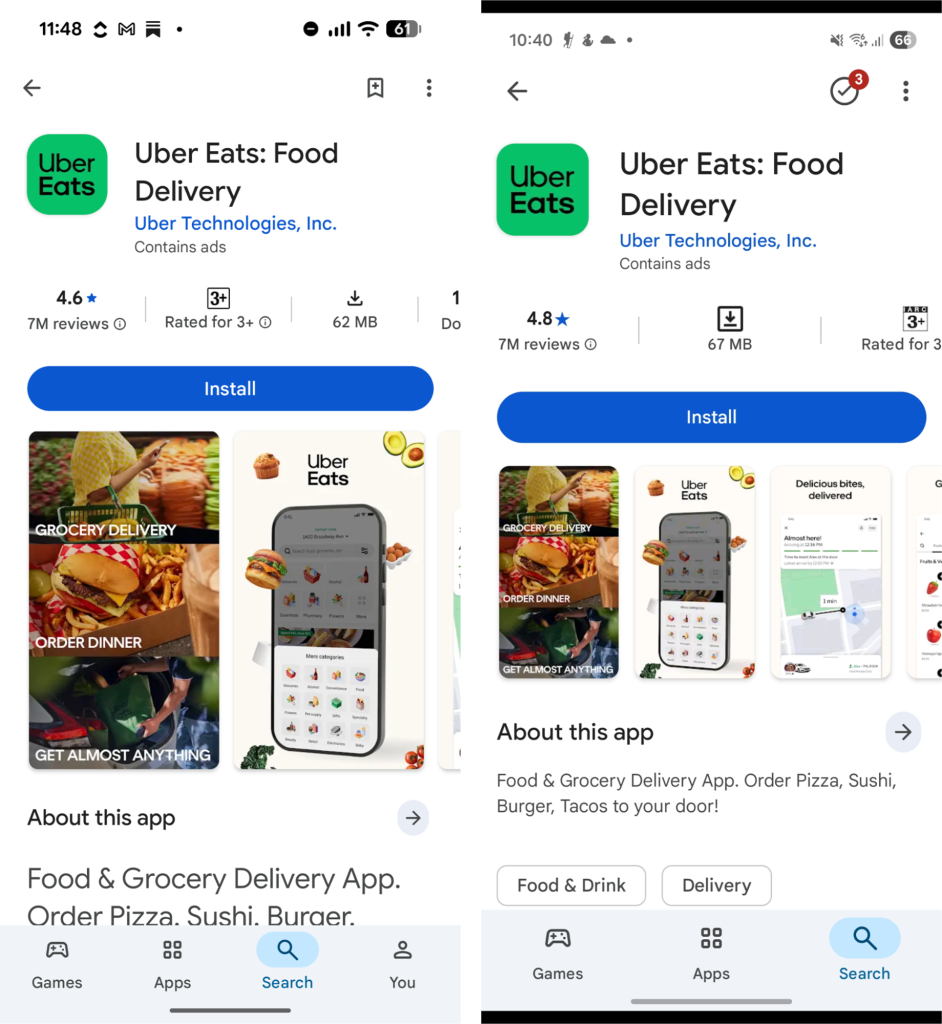
What happened: On August 25, we noticed that Google Play increased the display size of the short description and screenshots ( when no video is present) on the store listings. The change currently applies only to the store listing view, while asset sizing remains unchanged across search results and other Play Store placements.
ASO Impact: The larger format makes the short description and screenshots easier to read and evaluate at a glance, increasing the visual prominence of these assets. However, because screenshots now occupy more space, users primarily see the first two screenshots instead of the first three, making the opening screenshots even more critical for communicating the app’s strongest value propositions
Google Play adds broader targeting capabilities for Custom Store Listings
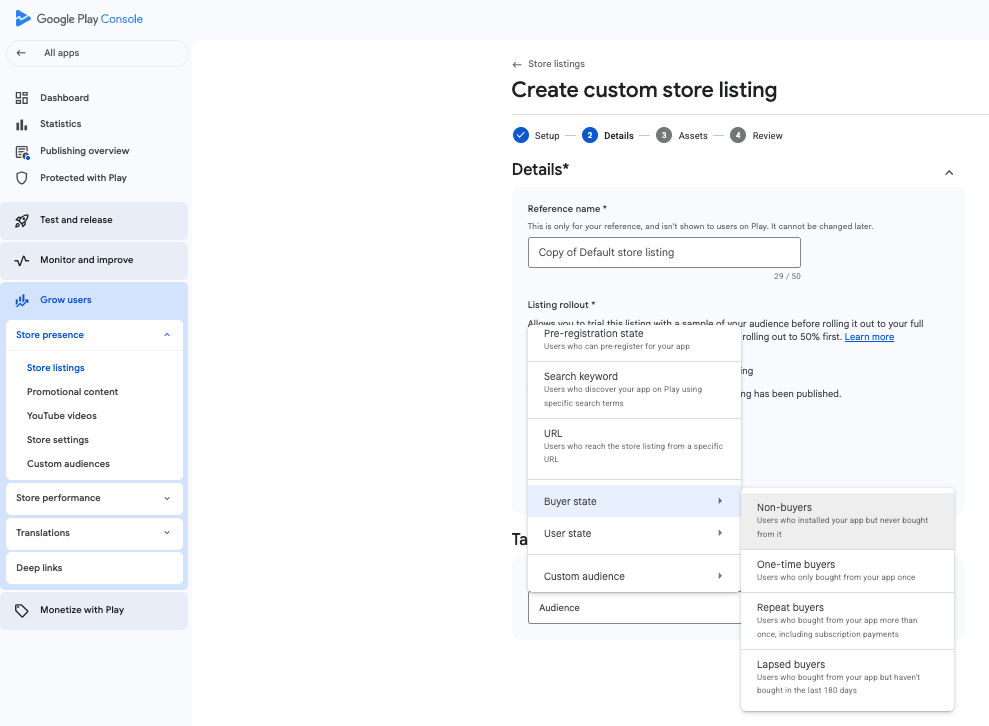
What happened: In August, Google expanded Custom Store Listing (CSL) targeting with new audience segmentation capabilities. Publishers and ASO teams can now target churned and inactive users, either separately or together, as well as audiences based on purchase behavior, including lapsed buyers, repeat buyers, one-time buyers, and non-buyers. Google also introduced custom audience targeting, allowing teams to define specific user groups manually via CSV upload or programmatically through Google’s grouping API.
ASO Impact: CSLs are becoming a more powerful integrated growth tool, moving beyond acquisition-focused targeting. ASO teams can now tailor store messaging and creatives based on a user’s relationship with the app, for example, highlighting new content to churned users, stronger value propositions to non-buyers, or exclusive benefits to previous purchasers. This creates opportunities to test audience-specific creative strategies across acquisition, retention, reactivation, and monetization, rather than relying on a single store experience for all returning users.
Google Play strengthens safeguards for Generative AI apps
What happened: On August 25, Google published “Ensuring Safety in the Generative AI Ecosystem”, outlining stricter safeguards against non-consensual intimate imagery and other harmful AI-generated content. Google is repeatedly testing GenAI apps throughout their lifecycle, not just at submission, and is asking developers to provide reviewers with full access to AI features, including premium and geo-restricted functionality. Developers are also expected to demonstrate how their apps handle adversarial prompts, deepfakes and explicit-image requests, while Google can remove violating apps and restrict their advertising and monetization.
Google Play expands Age Signals API globally
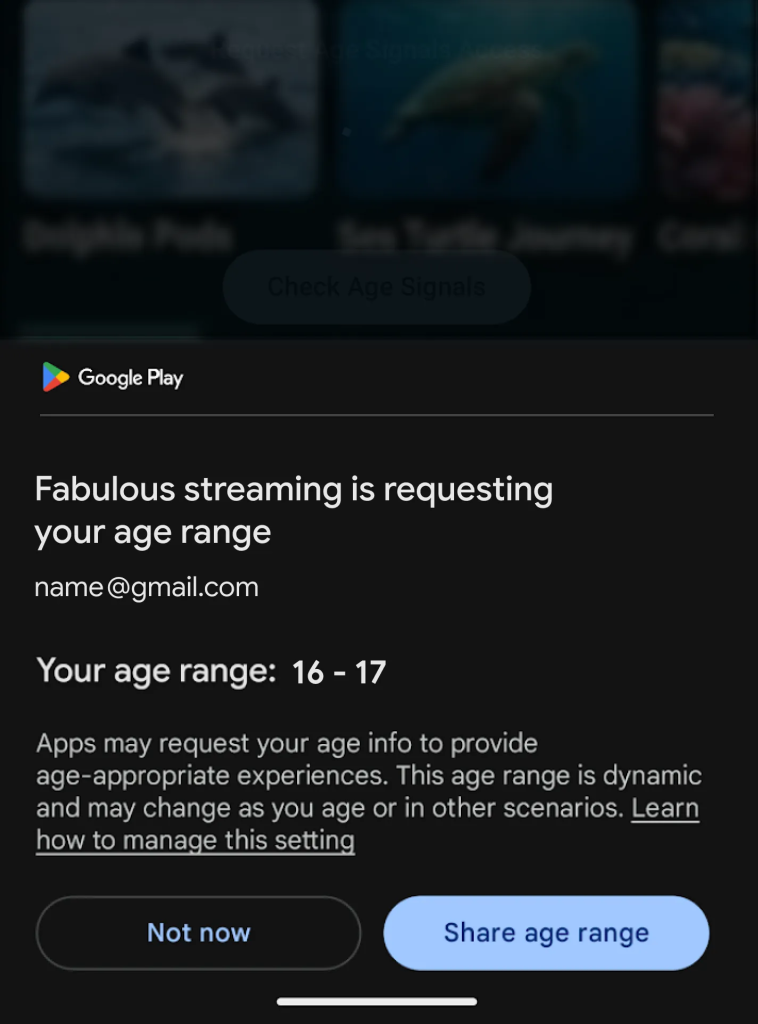
What happened: On July 29, Google announced “Delivering safer, age-appropriate experiences on Google Play”, expanding the Play Age Signals API to all developers globally. Following its launch in Brazil, Google began expanding it to Australia and Canada in August, with a broader global rollout planned later in 2026. The privacy-preserving API lets parents optionally share a child’s age range through Family Link, while developers can use that signal to customize app content, features and safety settings for different age groups.
Interesting Reads/Listens/Watches
Why is your ASO Marketing Strategy being impacted by EU AI Act? | Phiture
How to Reply to Steam Reviews: Developer’s Guide (2026) | AppFollow
Why Producing More Creatives Won’t Save Your Growth Strategy | Phiture
ASO with Experts:
As integrated growth becomes an increasingly important part of app growth strategy, the new Google Play CSL capabilities give ASO teams a much stronger opportunity to work in alignment with CRM, Paid UA, and lifecycle teams. The objective is no longer just to convert a user at the point of acquisition, but to use the store as part of the wider customer journey, helping bring users back, re-engage them with relevant messaging, and surface offers that are more closely aligned with their needs and purchase behavior. This can ultimately improve both the product experience and the buying experience, while making ASO a more connected part of the overall growth engine.
Talha Mumtaz
Senior Growth Manager
Table of Contents