











Welcome to this month’s edition of ASO Monthly — your go-to update on what’s moving the needle in App Store Optimization.
We break down the latest algorithm changes, trends, and experiments across app stores, alongside CRO insights, tool updates, and developer platform news.
📬 Subscribe to our newsletter to get ASO Monthly in your inbox every month:
Subscribe to the ASO Monthly Newsletter
Get the latest ASO updates straight to your inbox, once a month.
February 24
Apple Expands Age Assurance Tools (New Restrictions Live in Key Markets)
On February 24, 2026, Apple activated new age verification enforcement in Australia, Brazil, and Singapore. Users in these markets are now blocked from downloading apps rated 18+ unless their adult status has been confirmed through Apple’s systems.
This builds on the January 31, 2026, deadline, by which all apps and games were required to have completed Apple’s updated age rating questionnaire — introducing 13+, 16+, and 18+ tiers alongside the existing 4+ and 9+ ratings.
ASO Impact: 18+ apps in Australia, Brazil, and Singapore may see lower conversion rates. Adding friction in the install flow (age confirmation prompts) will reduce conversion rates. You can expect a possible drop in organic downloads from these markets if your app carries an 18+ rating.
Source: Here
Google’s Annual Safety Report: 1.75M Apps Blocked, AI Supercharges Review
In February 2026, Google published its annual Android & Google Play safety report for 2025. As per the report, some of key findings are attached to the table below:
| Metric | 2025 | 2024 | Change |
| Policy-violating apps blocked | 1.75 million | 2.36 million | ▼ 26% |
| Developer accounts banned | 80,000 | 158,000 | ▼ 49% |
| Apps blocked from sensitive data access | 255,000 | 1.3 million | ▼ 80% |
| Spam ratings/reviews blocked | 160 million | N/A | New metric |
| Malicious apps detected outside Play (Play Protect) | 27 million | 13 million | ▲ 108% |
Key Insights:
- Google blocked 160 million spam ratings and reviews in 2025 and prevented average 0.5-star rating drops from review bombing campaigns. This directly protects legitimate apps’ ratings from manipulation, but it also means that any spike in reviews will be scrutinized. Incentivized review campaigns that violate guidelines face immediate suppression.
- Threats are shifting outside the Play Store. With 27 million malicious apps detected via sideloading channels (up from 13 million in 2024), Google is tightening its grip on off-store distribution — which directly motivates the upcoming developer verification policy discussed below.
Source: Here
Google Play Widely Rolls Out the ‘You’ Tab
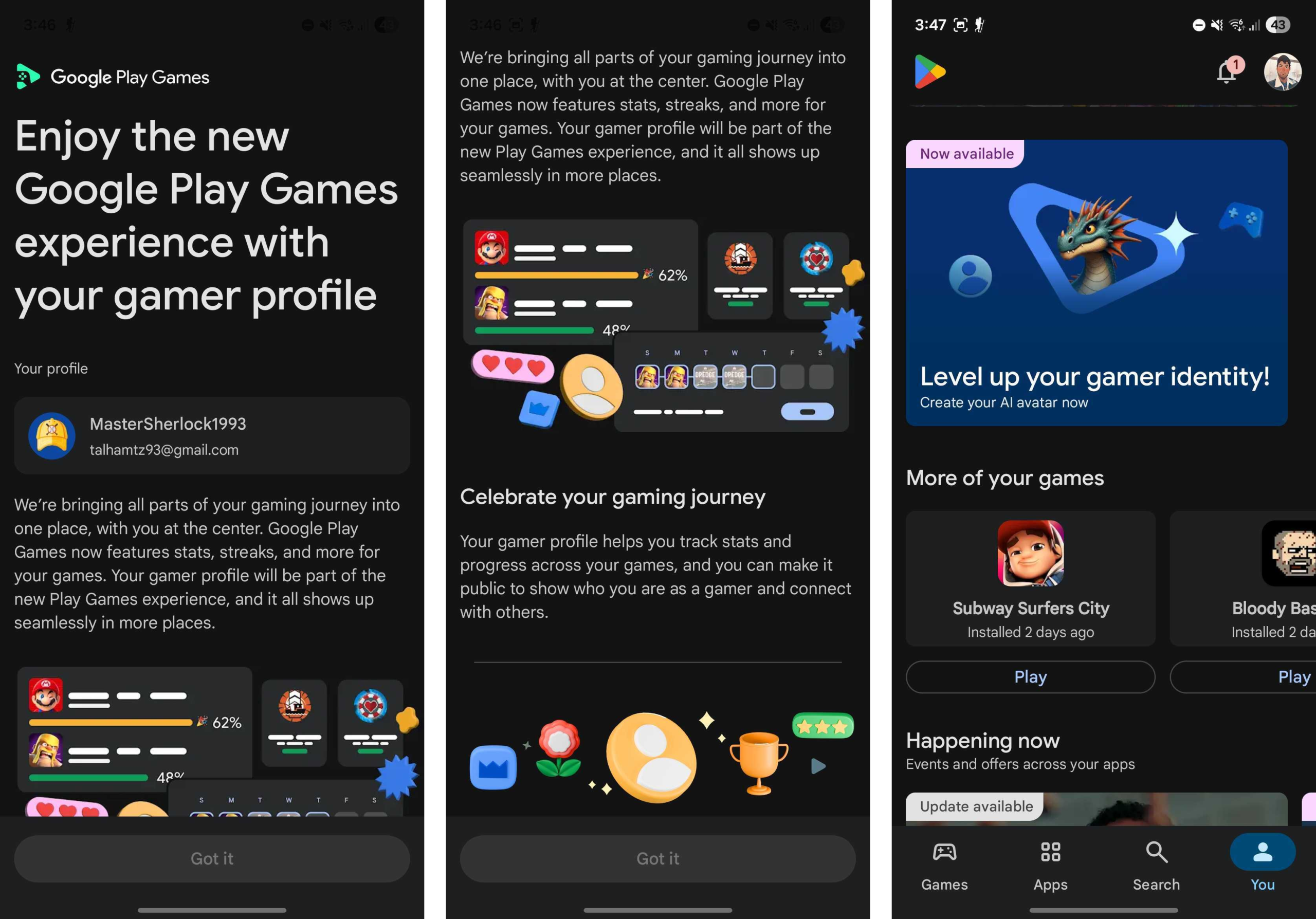
In February, Google Play widely rolled out the new ‘You’ tab. This tab features gamer profiles with cross-game stats, daily play streaks, progress tracking, Leagues, and the Gemini-powered Sidekick overlay.
ASO Impact: The ‘You’ tab converts your Google Play presence from static visibility into a live game hub surfacing events and player activity, meaning games that integrate Play Games Services, run regular LiveOps, and qualify for Google’s Level Up program will compound all three of these metric gains into stronger ranking signals, higher featuring eligibility, and a widening visibility gap over competitors who don’t.
Google Play Developer Verification Opens to All (Starts March 2026)
Following its August 2025 announcement, Google is opening its Android Developer Verification process to all developers in March 2026. Previously in early access since October/November 2025, this process requires developers to verify their identity to distribute apps on certified Android devices whether through the Play Store, alternative stores, or sideloading.
ASO Impact: Competitive landscape cleanup: Verification requirements will further reduce the volume of fraudulent, clone, and spammy apps entering the Play Store — shrinking the noise that suppresses discovery for legitimate apps. A cleaner store improves the signal-to-noise ratio for ranking signals like ratings, engagement, and keyword relevance.
Source: Here
Apple Revises its User-Generated Content Guidelines for Apps with Chat
Apple clarified its User-Generated Content (UGC) guideline (1.2), requiring apps with social or creator content to implement stronger moderation systems (including content filtering, reporting tools, user blocking, and clear contact information) and warning that apps centered on anonymous chat, bullying, or explicit content may be removed.
ASO Impact: Ignoring proper moderation systems in your app may result in removal from the App Store, as per Apple.
Source: Here
Interesting Reads/Listens/Watches
Phiture is joining forces with Precis | Phiture
The LiveOps Playbook: What Actually Works in Mobile Games Today | AppSamurai
ASO with Experts:
We’ve recently observed potentially malicious activity in the Google Play Store, particularly in emerging markets, where illegal bot (possibly unintentional and may be used by unfair competition) campaigns may target apps or games. These campaigns can artificially inflate visibility signals without corresponding increases in installs or reviews. If you notice unusual spikes that cannot be explained by algorithm changes, keyword movements, featuring, or paid campaigns, it’s important to report the incident to Google as soon as possible. Ignoring or delaying action could potentially lead to significant negative consequences for your app’s performance or visibility on the store.
Talha Mumtaz
Senior Growth Manager
Table of Contents